
Why Americans Should Care About Female Genital Mutilation (FGM)
Female Genital Mutilation (FGM) is often viewed as a distant issue—something that happens “over there,” in faraway countries and cultures. But the truth is, FGM is a global human rights crisis that directly affects communities in the United States. And it demands our attention, compassion, and action.
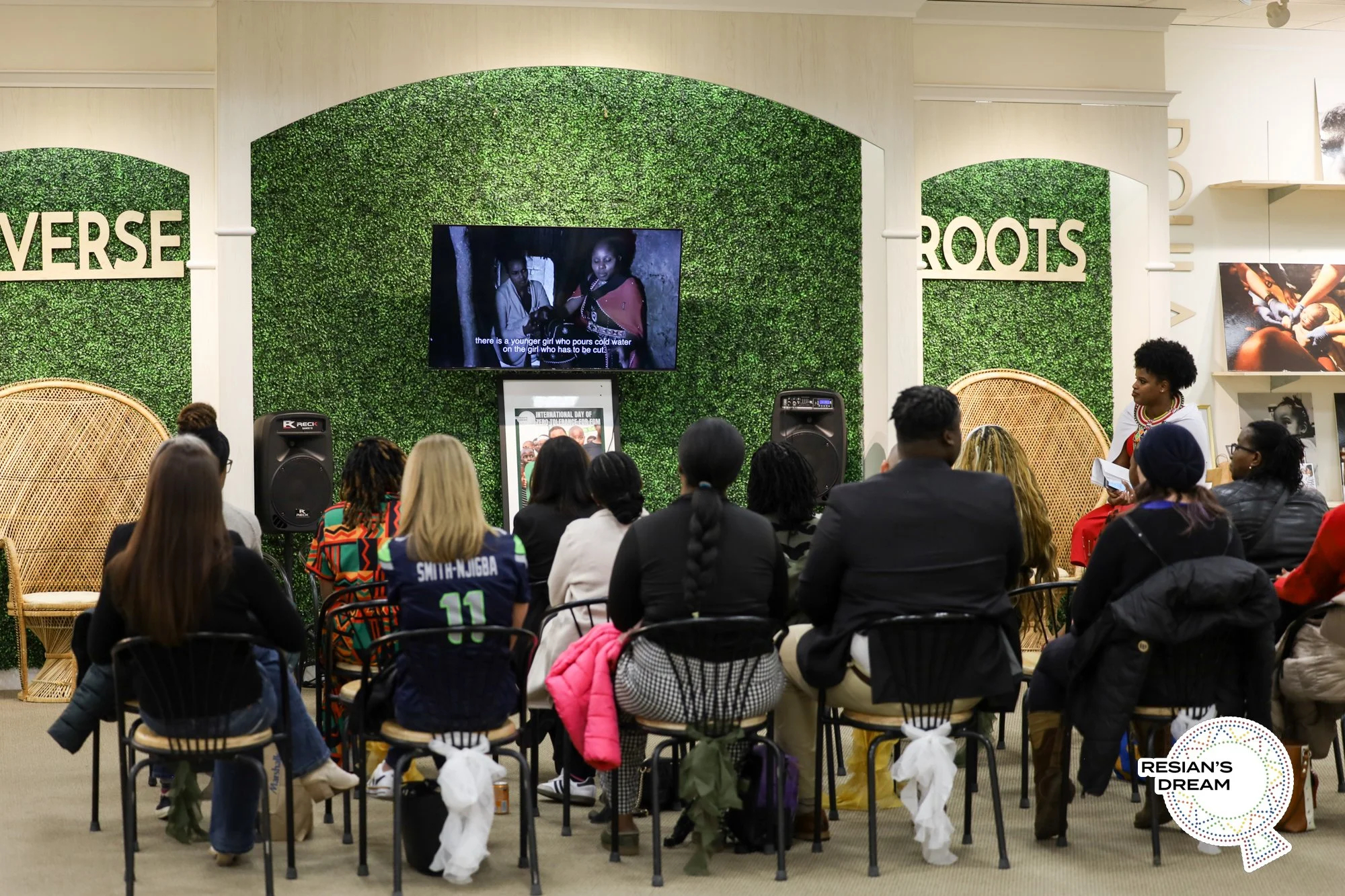
Watching “Against All Odds” documentary at Her Voice Matters event - on the International Day of Zero Tolerance for FGM (2026) in Spokane, Washington at Diverse Roots in the North Town Mall.
FGM Is Happening in the United States
FGM is not a foreign problem. It is estimated that more than 500,000 women and girls in the U.S. are either at risk of or have already experienced FGM. Survivors live in cities and towns across the country—often silently, often without adequate medical, psychological, or legal support.
Some girls are subjected to FGM domestically. Others are taken abroad during school breaks in a practice known as “vacation cutting.” Despite being illegal in the United States, enforcement gaps, lack of awareness, and cultural stigma allow the practice to continue largely hidden.
It Is a Severe Violation of Human Rights
FGM has no medical benefit. Instead, it causes lifelong physical and emotional harm, including:
Chronic pain and infections
Complications during childbirth
Severe trauma, anxiety, and PTSD
Loss of bodily autonomy and consent
At its core, FGM is about controlling the bodies and sexuality of girls and women. It violates fundamental human rights—including the right to health, safety, dignity, and freedom from violence.
Silence Allows Harm to Continue
One of the biggest reasons FGM persists is silence. Many Americans have never heard of it, or assume it has nothing to do with them. Survivors may fear speaking out due to shame, stigma, or concern for their families and communities.
When society stays quiet, harmful practices continue unchecked. Awareness is not about attacking cultures—it is about protecting children and supporting survivors.
It Is a Child Protection Issue
FGM is most often performed on minors—sometimes on girls as young as infancy. That makes it not only a women’s issue, but a child protection and safeguarding issue.
Just as Americans stand against child abuse, forced marriage, and trafficking, we must also stand against FGM. Children deserve safety, autonomy, and the right to grow up free from irreversible harm.
Communities Need Support, Not Judgment
Ending FGM requires culturally informed, community-led solutions. Many people within affected communities are actively working to end the practice—but they need resources, education, and allies.
Organizations like Resian’s Dream partner directly with communities, survivors, and advocates to:
Educate families and youth
Support survivor healing
Promote alternative rites of passage
Advocate for stronger protections and enforcement
Change happens when compassion meets action.
Why Your Voice Matters
FGM may not affect every American directly—but injustice anywhere affects us all. When we care, speak up, donate, share information, and support organizations on the front lines, we help create a world where girls are protected—no matter where they are born.
FGM thrives in the shadows. Awareness brings it into the light.
Stand With Survivors. Protect Girls. End FGM.
Learn more about how Resian’s Dream is working to end Female Genital Mutilation and support affected communities at resiansdream.org.
